
Does Virtual Staging Sell Homes Faster? What the Evidence Says
Empty properties take longer to sell — that's measurable. Whether virtual staging closes the gap, what the data shows, and where it makes the biggest difference.
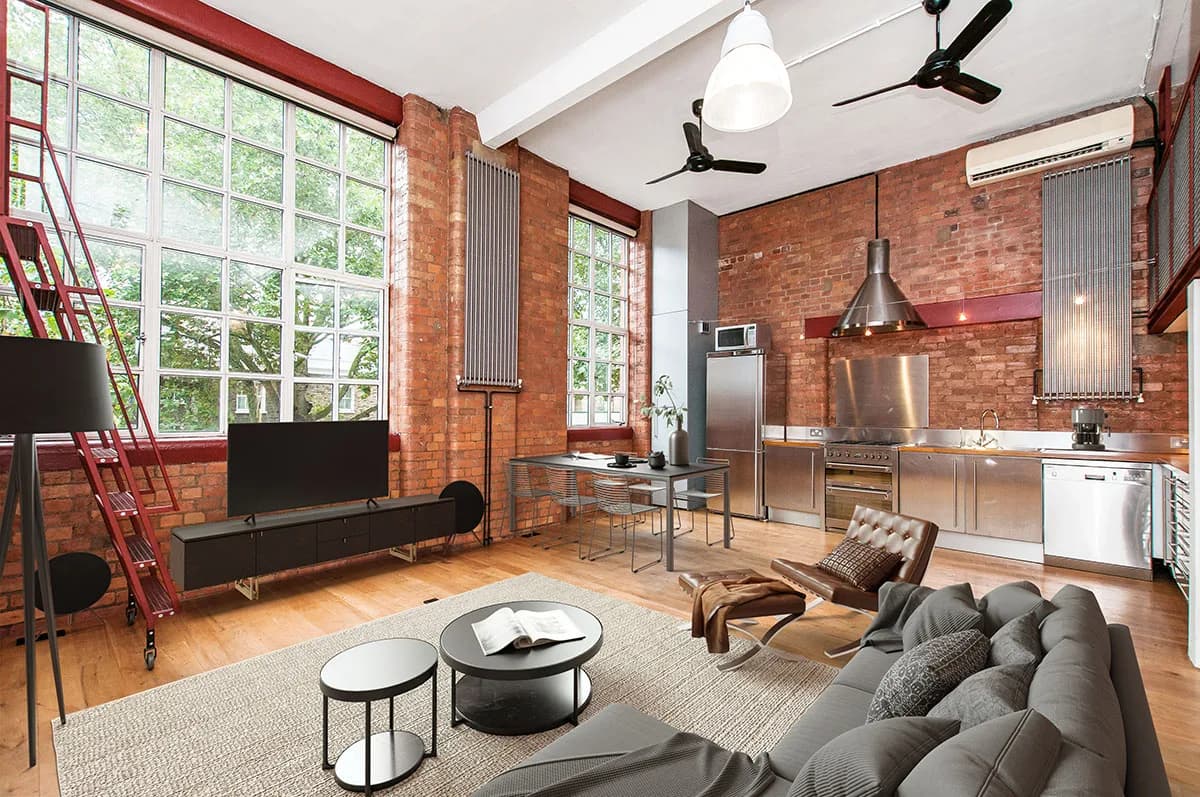
Key Takeaways
- Empty rooms are the problem — buyers struggle to judge scale and purpose, so empty listings get fewer clicks.
- Speed comes from early viewing volume; staging's job is to win the click and the first weekend.
- Virtual staging captures most of physical staging's online effect at 1–2% of its cost.
- Biggest impact — empty new-builds, probate sales, ex-rentals and awkward-layout rooms.
- Staged images must be labelled as virtual to stay compliant — and honesty costs nothing at the viewing.
Every agent has watched it happen: a perfectly good home, empty after the owners moved on, sits on the portal while smaller, worse-positioned — but furnished — competitors get the viewings. The question isn't whether empty listings underperform; the data and every agent's experience agree they do. The question is whether virtual staging actually fixes it.
Why empty listings are slow
Three compounding problems:
- Empty rooms photograph badly. Without furniture for scale, rooms read smaller than they are — the opposite of what vendors assume. A 4m lounge with a sofa looks generous; bare, it looks like a question mark.
- Buyers can't assign purpose. Is that space a dining room or an office? A single bedroom or a study? Every unanswered question is friction, and friction loses clicks.
- No emotional hook. Buyers buy the life they imagine in a home. Bare magnolia boxes give the imagination nothing to work with — in photos and at viewings.
Fewer clicks means fewer early viewings, and the first fortnight of a listing is when competitive interest — the thing that protects asking prices — either forms or doesn't. That's the mechanism by which "empty" becomes "slow", and "slow" becomes "reduced".
What staging changes
Home-staging research has reported for years that furnished presentation helps buyers visualise a property as their future home, and that staged homes attract more interest early. Physical staging proved the principle; its problem was always cost — thousands per property, plus monthly rental.
Virtual staging delivers the online half of that effect — the half that wins clicks and books viewings — for £30–£60 per image. The portal gallery shows warm, furnished, purposeful rooms; buyers arrive at the empty property having already imagined it furnished. We've compared the two approaches in detail in virtual staging vs home staging; the short version is that virtual captures most of the marketing value at one to two percent of the cost.
Where it moves the needle most
- Empty new-builds and developer stock. Identical bare plots become differentiated, aspirational homes — and different plots can be staged for different buyer profiles.
- Probate and deceased-estate sales. Sensitively handled, staging shifts the listing's story from "someone's past" to "someone's future" — often the difference between morbid-curiosity clicks and genuine buyer interest.
- Ex-rentals. After tenants leave, listings inherit tired, empty rooms. Staging re-launches them without waiting for redecoration.
- Awkward rooms. The odd-shaped "third bedroom", the loft space, the basement room — staging answers "what is this for?" before buyers ask.
- Rentals and voids. Staged lettings photos work for years across successive tenancies; against the cost of void weeks, the arithmetic is over quickly.
Doing it right
Two rules keep virtual staging effective and compliant:
Label it. Marked "virtually staged", ideally with the original photo available. UK consumer protection rules require marketing that doesn't mislead — and disclosed staging doesn't. Buyers respond well to labelled staging; they understand they're seeing potential, not inventory.
Stage honestly. Furniture at true scale, no hiding defects, real spec. Staging that oversells collapses at the viewing — the goal is to close the imagination gap, not open a credibility one.
Quality matters too: photorealistic furniture, correct shadows and perspective, styles matched to the target buyer. A badly staged image is worse than an empty one. Start from good photography — sharp, wide, level shots of each room (our photography tips apply doubly to rooms being staged).
The arithmetic
An empty £350,000 house costs its owner mortgage interest, insurance, council tax and price-pressure every week it sits. Staging the six key rooms costs under £300 and is delivered in 48 hours. If it accelerates the sale by a single week, it has returned several times its cost; if it prevents one £5,000 reduction, it has returned twenty times. There is no cheaper intervention on an empty listing with this much evidence behind the mechanism.
The bottom line
Virtual staging sells homes faster the same way all good marketing does — by winning more of the early attention that creates competitive interest. For empty properties, it's the highest-leverage, lowest-cost fix available, and it should be tried long before the first price reduction is discussed.
Photoplan delivers photorealistic virtual staging from £30 per image within 48 hours — disclosure labelling included, from your photos or a professional shoot.
Frequently Asked Questions

The Photoplan Team
Property Media Specialists
The Photoplan team produces property photography, floor plans, tours, video and CGI that help estate agents, developers and commercial clients market property beautifully.
Empty listing sitting on the portal?
Photoplan virtually stages empty rooms with photorealistic furniture from £30 per image, delivered within 48 hours with compliant labelling.
Estate agents book through the app · One-off customers order in the shop · or contact us
Related Articles
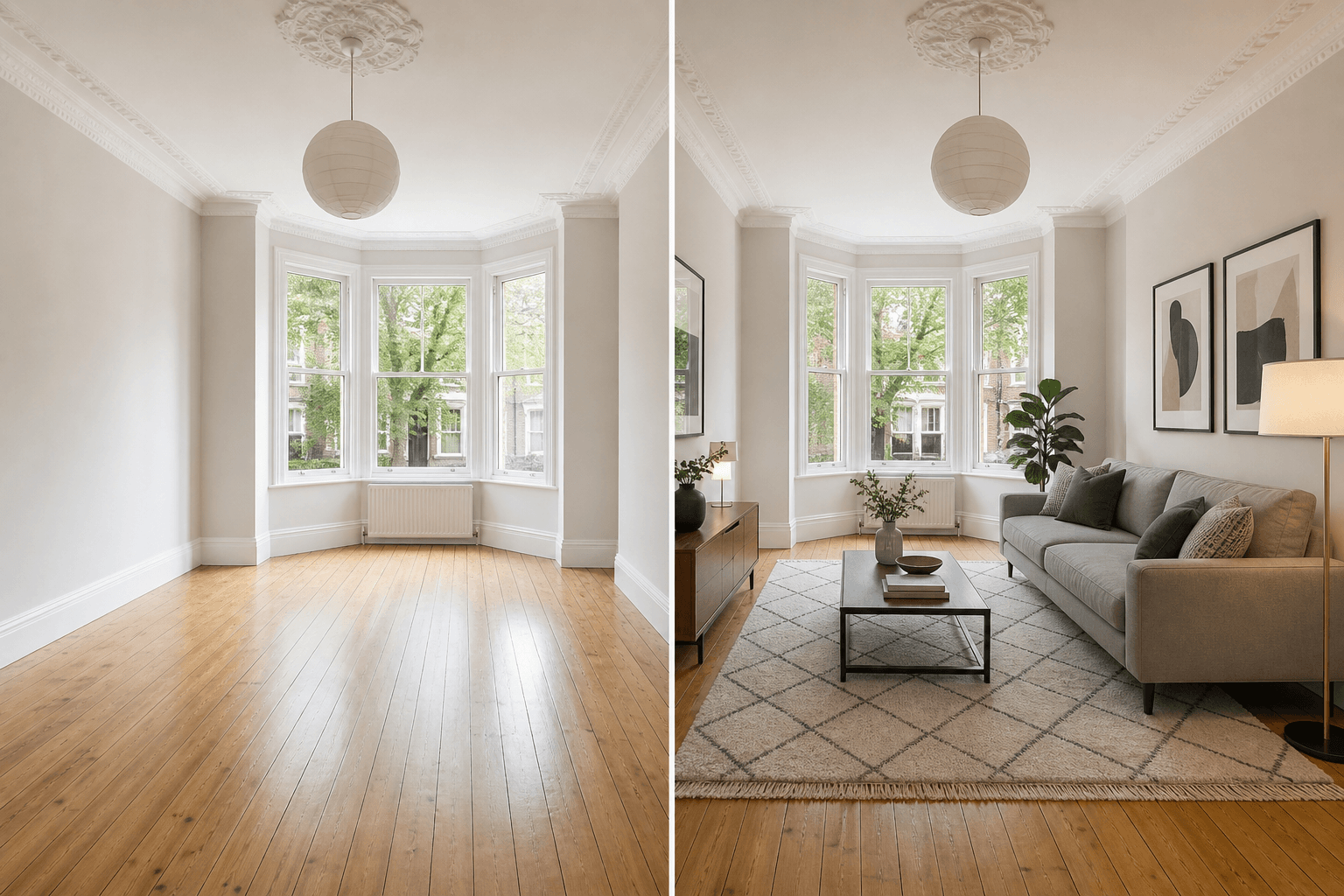
Virtual Staging vs Traditional Home Staging: The Real Cost Comparison for UK Agents
Physical staging can run to thousands of pounds per month. Virtual staging costs a fraction per image. Here's an honest cost comparison — and the situations where each approach genuinely earns its money.

Virtual Staging vs Home Staging: Which Should You Use?
Virtual staging costs a fraction of physical home staging — but is it as effective? A practical comparison of cost, speed, results and when each approach wins.
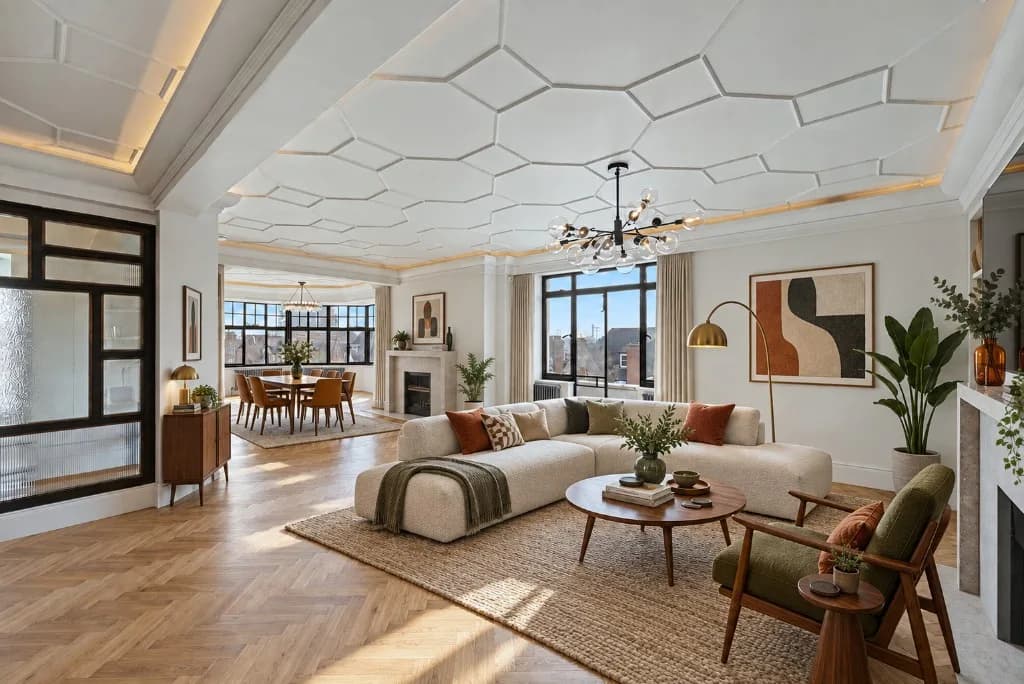
Virtual House Staging Explained
A practical UK guide to virtual house staging — what it is, how it works, costs, AI versus professional staging, labelling, and when estate agents and developers should use it.