
Content Marketing for Estate Agents: How Blogs and Guides Win Instructions
Estate agency content marketing that actually works — what to write, how local content wins vendors, and why AI search makes helpful content more valuable, not less.

Key Takeaways
- Vendors research for months before instructing — content meets them early, before the valuation shortlist exists.
- Local specificity wins; generic "top tips" content earns nothing against national portals.
- Answer real questions with real numbers — AI search engines quote specific, helpful sources.
- One good post a month, sustained, beats a launch burst that dies by March.
- Every listing's marketing assets — photos, tours, video — are reusable content.
Most estate agency blogs are graveyards: three posts from a launch enthusiasm in 2023, a market update that stops mid-year, and a "top tips" article indistinguishable from ten thousand others. Meanwhile a handful of agents in every region quietly rank for the searches vendors make months before instructing — and walk into valuations already trusted.
The difference isn't budget. It's understanding what agency content is actually for.
Content is a valuation strategy, not a traffic strategy
Vendors don't wake up and instruct an agent. They spend months in research mode first: what's my house worth, is now a good time, how does selling work, who's good locally? Every one of those searches is a moment an agency can be present — and almost none of your competitors are.
That's the honest goal of agency content: not viral reach, but being the name a vendor has already read, trusted and half-chosen before the valuation shortlist is drawn up. Traffic numbers on a post about "selling a house in Guildford" will look tiny next to a portal's — but every reader is a potential instruction, which is a conversion audience portals will never sell you.
What to publish (and what to skip)
Publish:
- Local market updates with real numbers. "What sold in [area] this quarter and what it means" — quarterly, honest, specific. This is the content vendors bookmark.
- Area guides. Schools, streets, price bands, who's moving there and why. These rank for buyer searches, earn links, and mark the agency as the local authority. Shoot them with real local photography, not stock.
- Process explainers. What happens from valuation to completion, what marketing you provide, what your fee buys. Transparency converts — vendors fear the unknown more than the fee.
- Marketing case studies. "How we sold the four-bed on Mill Lane in nine days" — with the photography, floor plan and video that did it. This is the content that wins instructions directly, because it shows the product.
Skip: national generic listicles, recycled portal news, anything you couldn't sign with your town's name. If a competitor in Leeds could publish the identical post, it earns nothing.
The AI search shift works in your favour
More vendor research now happens through AI assistants and Google's AI answers — and those systems quote sources that answer questions directly with specific, verifiable detail. That changes the writing brief:
- Lead with the answer. First paragraph answers the question; detail follows.
- Use real numbers. "Terraced homes in [area] averaged £312,000 this quarter" is quotable; "prices remain robust" is not.
- Structure as questions. Headings that match what people actually ask get lifted into answers.
- Be honestly opinionated. "We advise most vendors in [situation] to wait until spring" reads as expertise — because it is.
Thin content lost its remaining value; genuinely helpful content got a second distribution channel. For a small local agency, that's the best trade in years.
The realistic publishing system
The reason agency blogs die is the plan was never realistic. This one is:
- One flagship post a month. Market update, area guide or case study. Two hours with real numbers beats ten thin posts.
- Cut it into social. Every flagship post yields a week of posts, and every listing's video and photography feeds the feed between them.
- Refresh the evergreens annually. The selling-process guide and area guides get a yearly numbers-and-date pass — cheaper than writing new, and Google notices maintained content.
- Let listings do double duty. Every instruction's marketing assets — twilight shots, aerial images, tours — are content. The agency that photographs beautifully never runs out of things to post.
The bottom line
Content marketing works for estate agents when it stops imitating publishers and starts doing an agent's actual job in written form: knowing the local market, explaining it honestly, and proving marketing competence in public. One useful, local, specific post a month — sustained — puts an agency in front of vendors months before any competitor knows they exist.
And since the proof is visual: Photoplan's photography, tours and video give every listing the production quality that makes agency content — and the agency itself — look like the obvious choice.
Frequently Asked Questions

The Photoplan Team
Property Media Specialists
The Photoplan team produces property photography, floor plans, tours, video and CGI that help estate agents, developers and commercial clients market property beautifully.
Make every listing produce your content
Photoplan's photography, tours and video give agents a stream of scroll-stopping local content — every instruction becomes marketing for the next one.
Estate agents book through the app · One-off customers order in the shop · or contact us
Related Articles

Should Estate Agents Photograph a Property Before Winning the Instruction?
Some agents shoot before they are appointed to wow the vendor. Sometimes it wins the business — sometimes it wastes money and goodwill. Here is a clear framework.
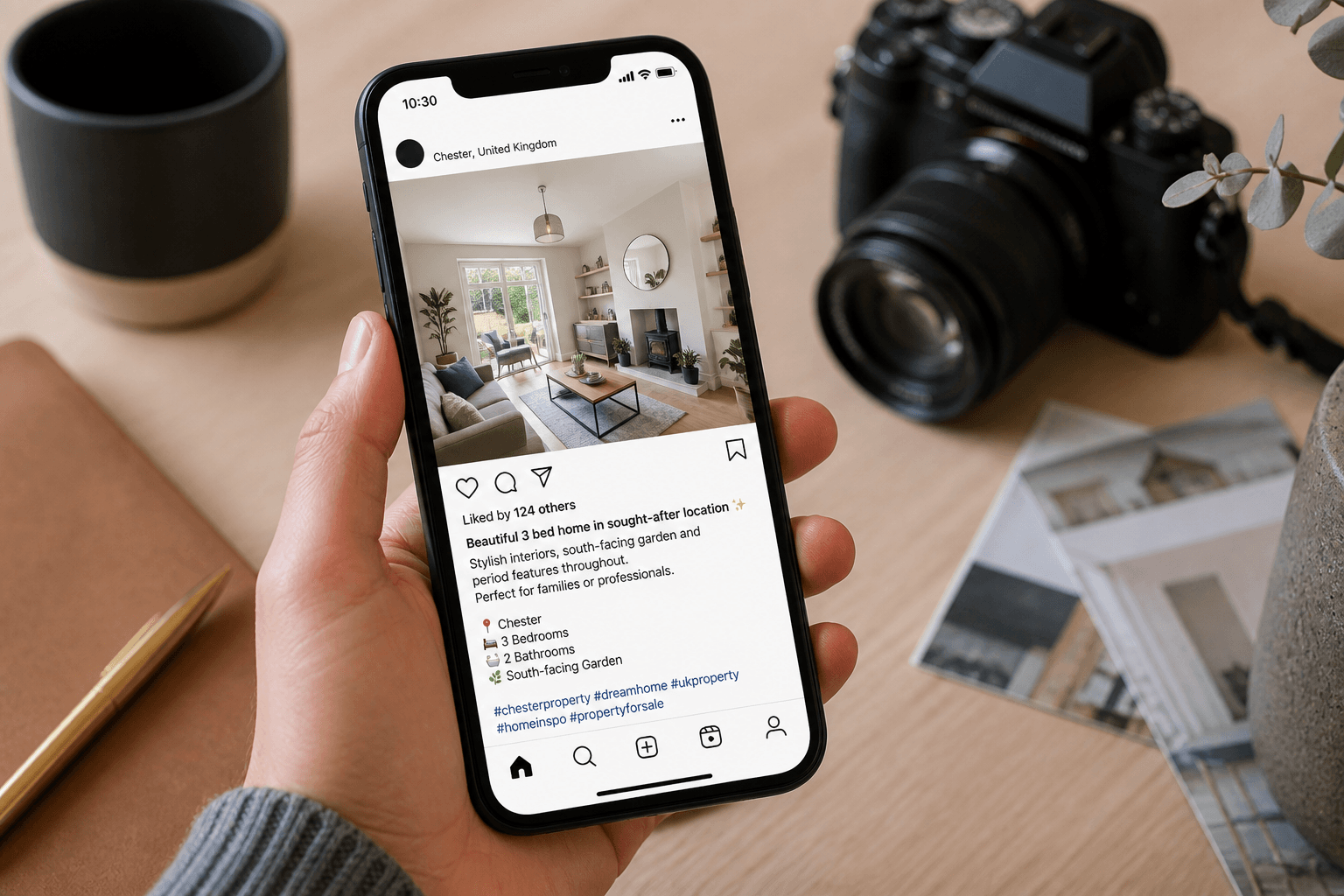
Using Property Photos on Instagram: A Practical Guide for Estate Agents
Portal photos are not automatically social photos. Here is how agents should crop, caption and sequence listing imagery for Instagram without wrecking the brand.

Brand-Consistent Property Photography Across Multi-Branch Agencies
Nothing undermines a regional brand like five branches looking like five different companies on Rightmove. Here is how to lock photography standards across locations.