
CGI Virtual Tours: Selling Property Before It Exists
CGI virtual tours let buyers walk through homes that haven't been built yet. How developers use them to sell off-plan, what they cost and how they differ from photographic 360 tours.
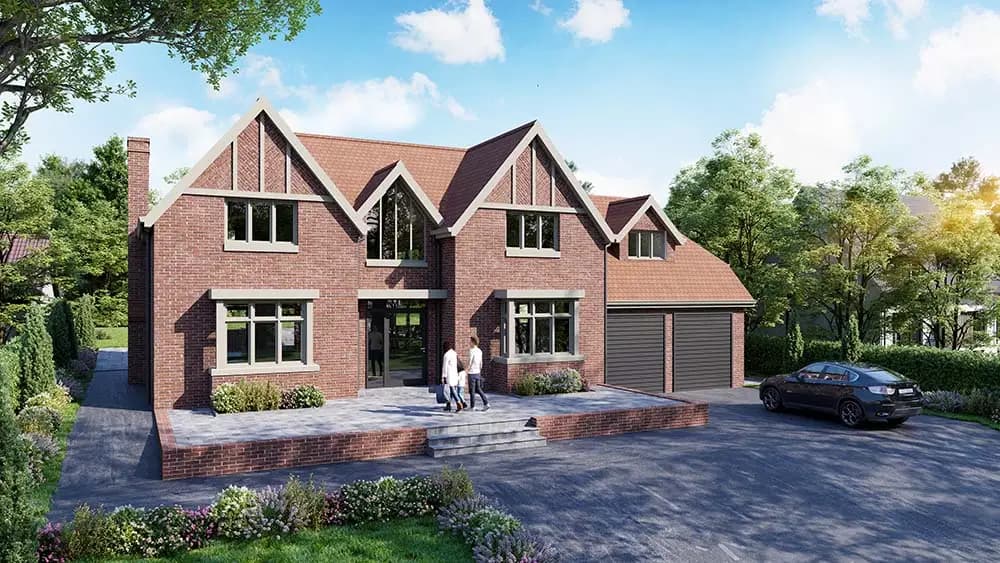
Key Takeaways
- CGI tours are built from plans and specifications — no finished building required.
- Off-plan buyers commit larger deposits when they can walk the space, not just view a render.
- One 3D model produces tours, stills, and marketing imagery for the whole scheme.
- Interior styles and finishes can be switched digitally — one plot, several presentations.
- Photographic 360 tours replace CGI tours once show homes are complete.
Off-plan sales ask buyers to do something unnatural: commit the biggest purchase of their lives based on a floor plan and an artist's impression. Every developer knows the objection — "I can't picture it." CGI virtual tours exist to remove it.
A CGI virtual tour is a fully interactive 360° walkthrough rendered from architectural plans — buyers move room to room, look around freely, and experience spaces that won't physically exist for another eighteen months. For schemes selling off-plan, it's become the difference between marketing a promise and marketing a home.
How a CGI tour is built
The process starts with the same documents the contractor uses:
- Plans and elevations — CAD files or PDFs define the geometry: room dimensions, window positions, ceiling heights.
- Specification — kitchens, flooring, sanitaryware, joinery, paint. The closer the spec detail, the more truthful the render.
- Interior direction — furnishing style and target-buyer positioning, from developer mood boards or our interior design team.
- Modelling, lighting and rendering — 3D artists build the spaces, then light them the way a photographer would: sun angles through the actual window positions, warm practical lighting for evening scenes.
- Tour assembly — rendered 360° scenes are linked into a navigable walkthrough, brandable and embeddable anywhere a photographic tour would go.
Production typically takes two to six weeks, so it slots into the launch runway alongside CGI stills and brochures — usually generated from the same 3D model, which is where the economics get attractive: one model powers the tour, renders and marketing imagery for the entire scheme.
Why it moves off-plan sales
It closes the imagination gap. A floor plan tells buyers the master bedroom is 4.2m × 3.6m. A CGI tour lets them stand in it. Reservations come easier when buyers have walked the property, and launch events become experiences rather than paperwork sessions.
It reaches distant buyers. Investors and relocators — often the backbone of off-plan demand — can explore every plot type from anywhere, and share the link with family and advisers.
It sells the spec. Upgraded kitchens and finish packages are much easier to sell when buyers can see them in context. Because the tour is digital, option variants can be rendered from the same model — one plot, multiple presentations.
It fills the gap before the show home. The hardest phase of any scheme is pre-construction, when there's nothing to show. CGI tours carry marketing through groundworks; once the show home completes, photographic 360 tours and photography take over, and the CGI assets move to later phases.
What CGI tours cost
| Package | Typical UK cost |
|---|---|
| Interior CGI scene set, one plot type (key rooms) | £500–£1,500 |
| Additional plot types from existing spec | Reduced per-plot rate |
| Exterior renders / street scenes | £400–£1,200 per view |
| Full scheme package (tours + stills + brochure CGIs) | Quoted per project |
Costs scale with room count, detail level and revision rounds. The per-plot economics improve quickly across a scheme because models, textures and furnishings are reused.
Keeping CGI marketing honest
CGI marketing sits under the same consumer protection rules as everything else on a listing: imagery must reflect what's actually being sold. In practice that means rendering the real specification (not aspirational upgrades unless labelled), matching the plans the buyer contracts against, and marking imagery as computer-generated. Done properly, accuracy is CGI's strength — the tour is built from the same drawings as the building.
The bottom line
Off-plan property sells on confidence, and confidence comes from experience — not floor plans. A CGI virtual tour gives buyers that experience before the foundations are poured, which is why it has become standard equipment for scheme launches, sales suites and portal listings alike.
Photoplan produces CGI virtual tours and architectural visualisation from your plans — photorealistic, spec-accurate and delivered ready for launch.
Frequently Asked Questions

The Photoplan Team
Property Media Specialists
The Photoplan team produces property photography, floor plans, tours, video and CGI that help estate agents, developers and commercial clients market property beautifully.
Launching an off-plan development?
Photoplan builds photorealistic CGI virtual tours, renders and visualisations from your architectural plans — ready for launch events, portals and sales suites.
Estate agents book through the app · One-off customers order in the shop · or contact us
Related Articles
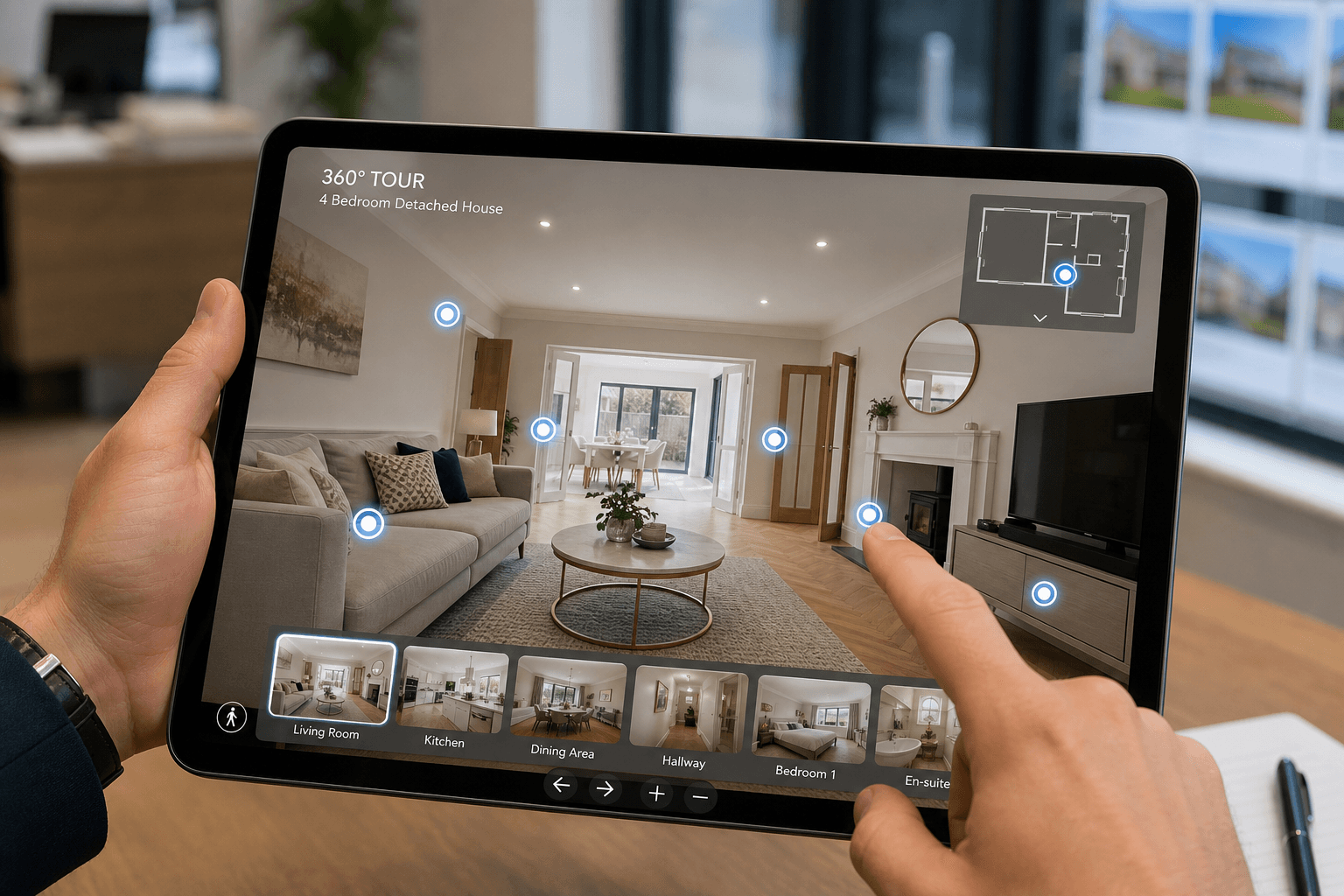
360 Virtual Tours UK: What Estate Agents Should Expect from a Tour Provider
Looking for 360 virtual tours UK? Here is what a professional tour includes, how it differs from Matterport and video, and how agents should brief and embed tours on portals.
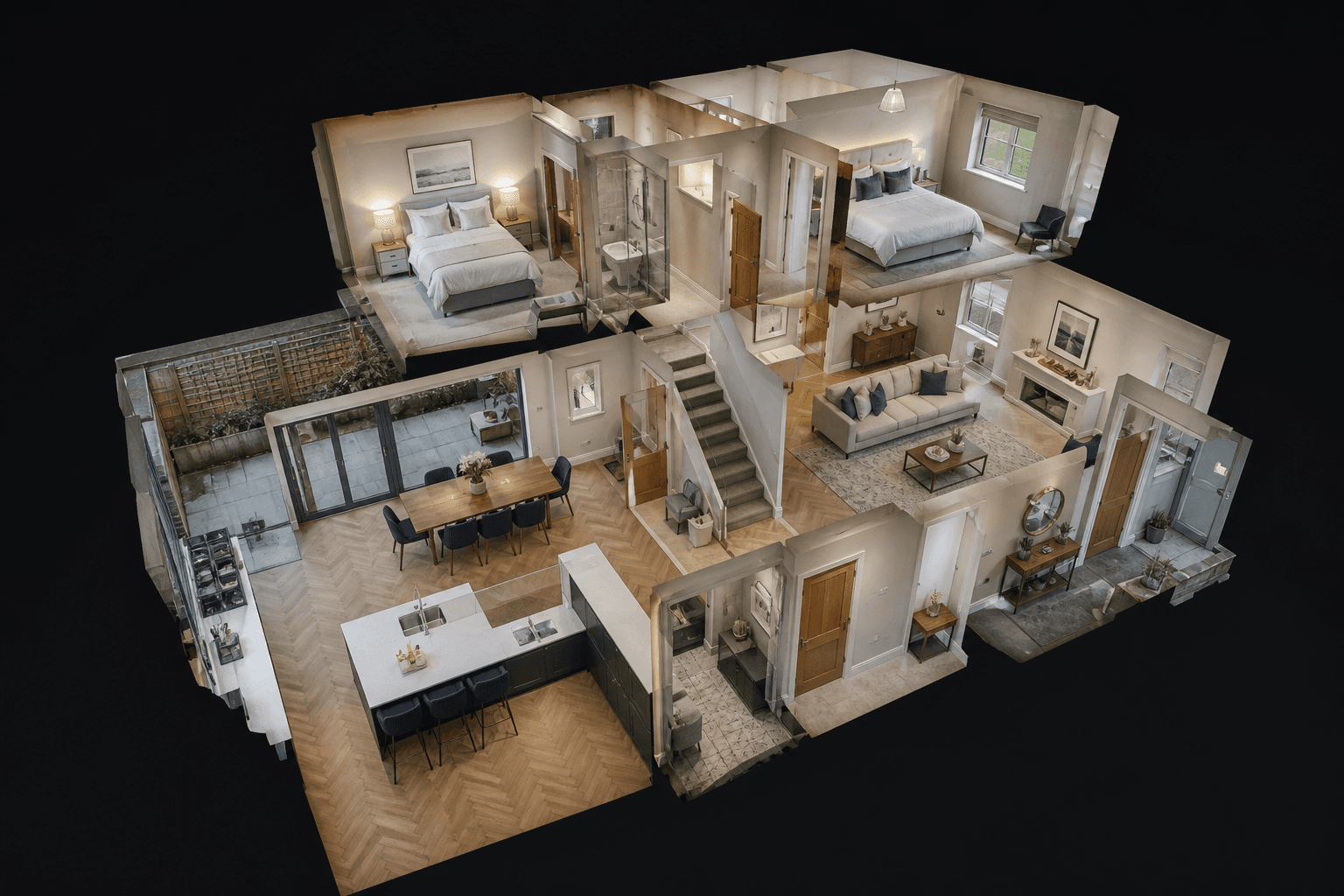
Matterport Scanning Services UK: What Agents and Landlords Get
Matterport scanning is more than a fancy tour. Here is what UK Matterport scanning services actually deliver — dollhouse view, measurements, schematic plans — and when to book them.
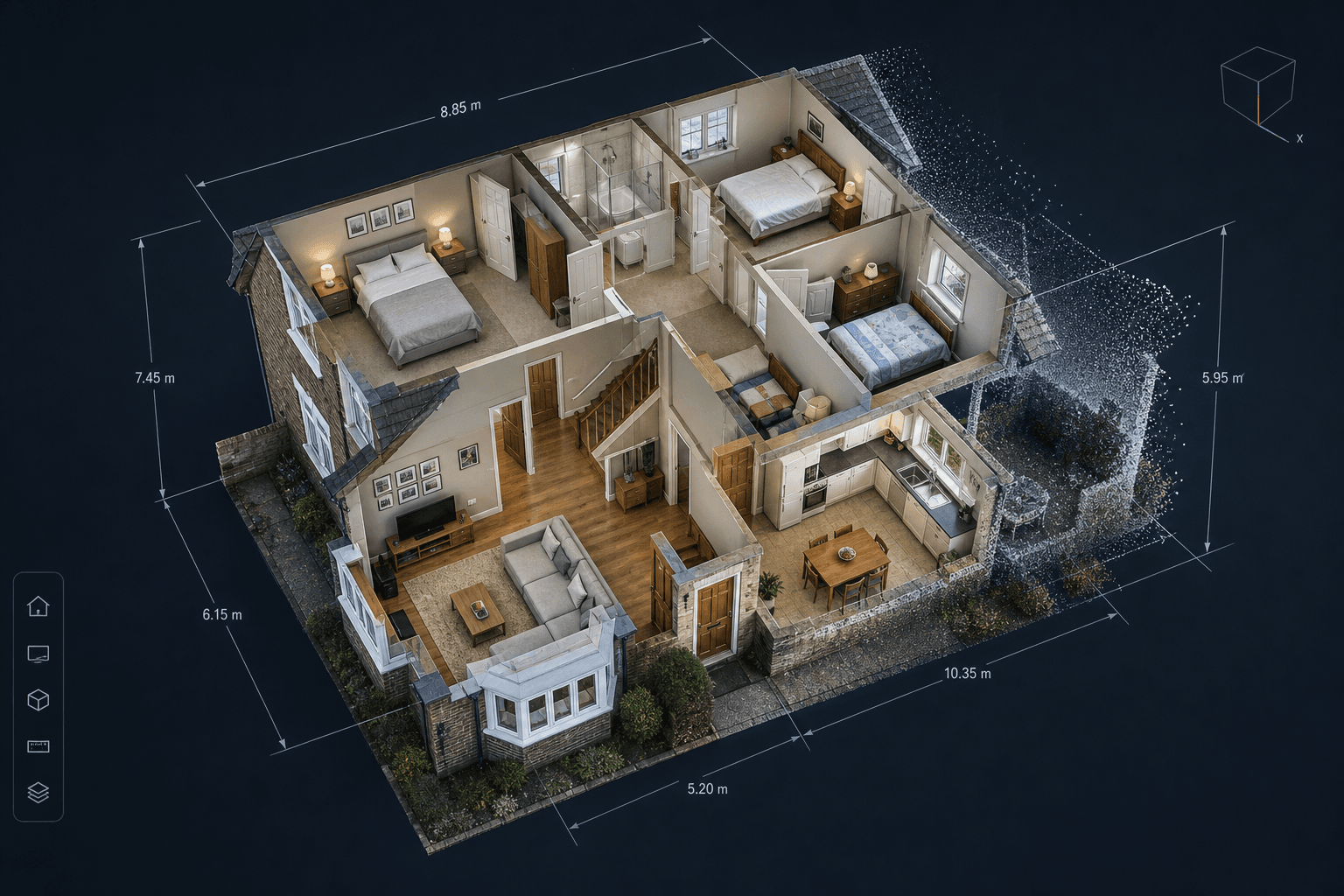
Digital Twins and Measured Surveys: What Property Professionals Need to Know
Digital twins have moved from construction jargon to practical property tool. Here's what a digital twin actually is, how measured surveys create one, and where agents, landlords and developers are using them today.