
360 Virtual Tours for Commercial Property and Business Premises
Offices, retail units, hotels, restaurants and industrial space all let and sell faster when occupiers can walk through online first. How commercial 360 tours work, what they cost and where they pay off.
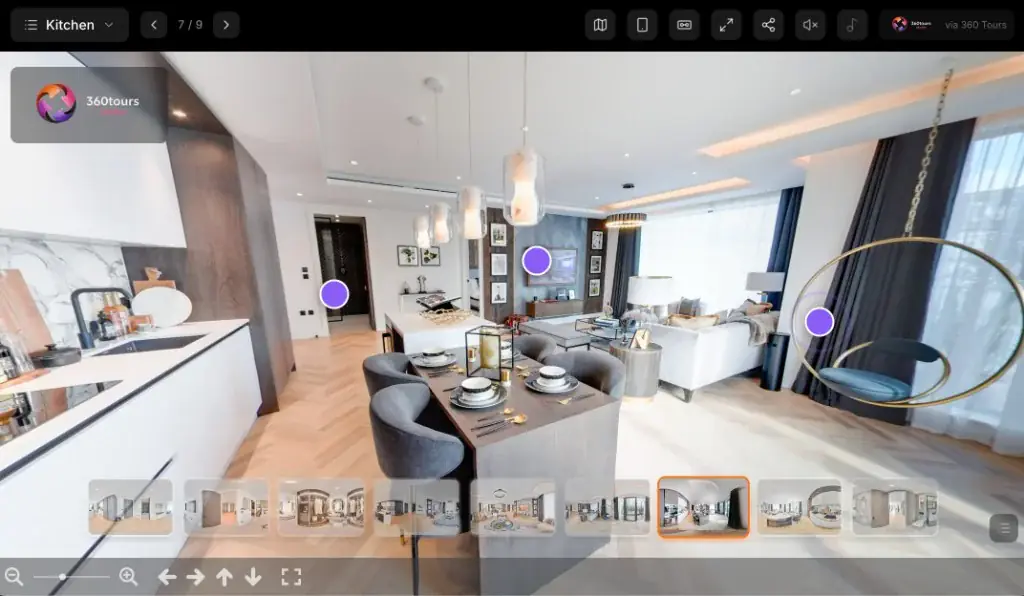
Key Takeaways
- Commercial decisions involve multiple stakeholders — a tour lets all of them view the space without coordinating a visit.
- Virtual tours filter out mismatched viewings, saving agents and occupiers dead time.
- Hotels, restaurants and venues use tours as permanent sales assets, not just letting tools.
- Tours embedded in Google Business Profiles (Street View) lift local search visibility.
- UK commercial tour pricing typically runs £150–£500+ by floor area.
Commercial property transactions have a coordination problem residential doesn't: the decision involves a managing director, an operations lead, sometimes a franchise board — often in different cities, occasionally in different countries. Getting them all to a viewing is slow. Getting them all through a 360 virtual tour takes one link.
That's why virtual tours have quietly become standard kit for commercial agents and landlords — and why customer-facing businesses increasingly keep the tour long after the space is let.
Why tours fit commercial deals so well
Everyone views, nobody travels. The occupier's whole decision chain walks the space independently, on their own schedule. By the time a physical inspection happens, the shortlist is real.
Viewings stop being speculative. The unit that "felt smaller than the particulars" no longer wastes an afternoon — occupiers self-qualify against the tour before booking. Agents report fewer, better viewings on toured stock.
The listing works around the clock. International and relocating occupiers view at their convenience. For investment sales, remote buyers complete first-stage due diligence without a flight.
Layout is the product. For offices and industrial space, buyers are evaluating floor plate, circulation, loading access and column spacing — spatial questions a photo gallery can't answer and a tour answers natively. Paired with measured floor plans or a Matterport scan, the tour becomes a genuine due-diligence document.
Sector by sector: where tours pay off
- Offices and coworking — the biggest user. Tours shortcut the multi-stakeholder problem and let space planners assess fit-out potential remotely.
- Retail units — frontage, depth and sight lines communicated instantly; franchise boards approve sites without site visits.
- Hotels, restaurants and venues — the tour outlives the letting: it becomes a permanent booking asset, letting guests and event planners preview rooms and spaces. This is where tours convert directly into revenue.
- Gyms, clinics and showrooms — customer confidence content; people prefer walking into a space they've already seen.
- Industrial and warehousing — eaves height, loading doors, yard space: exactly the details occupiers travel to verify, verifiable from a desk.
The Google Street View angle
Tours captured to Street View standards can be published into a Google Business Profile — so customers exploring Google Maps can walk through the premises directly from search results. For hospitality and retail businesses, this does double duty: richer local search presence and a measurable lift in customer trust before first visit. If the premises is customer-facing, capture the tour once and use it in both places.
What commercial tours cost
| Premises | Typical UK cost |
|---|---|
| Small unit / office suite | £150–£300 |
| Mid-size office / restaurant / retail | £250–£450 |
| Large or multi-floor premises | £500+ |
| Matterport scan with dollhouse + measurements | Quoted by floor area |
Capture takes one to three hours on site — for trading businesses, usually before opening — and tours are delivered within a few working days, brandable and embeddable in portals, websites and marketing emails.
Getting it right
- Shoot decluttered. Empty desks and clean counters age better than a snapshot of last Tuesday's mess.
- Capture the arrival. Entrance, reception, lift lobby — occupiers judge the experience their own visitors will have.
- Pair with a plan. Tour for feel, floor plan for measurements: together they answer both halves of due diligence.
- Reuse the asset. Website, Google Business Profile, proposals, event sales — a tour is marketing infrastructure, not a listing accessory.
The bottom line
Commercial property is bought and let by committees at a distance — the exact problem 360 tours were built for. For a few hundred pounds, a tour cuts wasted viewings, widens the occupier pool, and for customer-facing businesses keeps selling long after the ink dries.
Photoplan captures 360 virtual tours and Matterport scans for commercial premises nationwide — Street View compatible, brandable and delivered portal-ready.
Frequently Asked Questions

The Photoplan Team
Property Media Specialists
The Photoplan team produces property photography, floor plans, tours, video and CGI that help estate agents, developers and commercial clients market property beautifully.
Marketing a commercial space?
Photoplan captures 360 virtual tours for offices, retail, hospitality and industrial premises nationwide — portal-ready, brandable and Google Street View compatible.
Estate agents book through the app · One-off customers order in the shop · or contact us
Related Articles
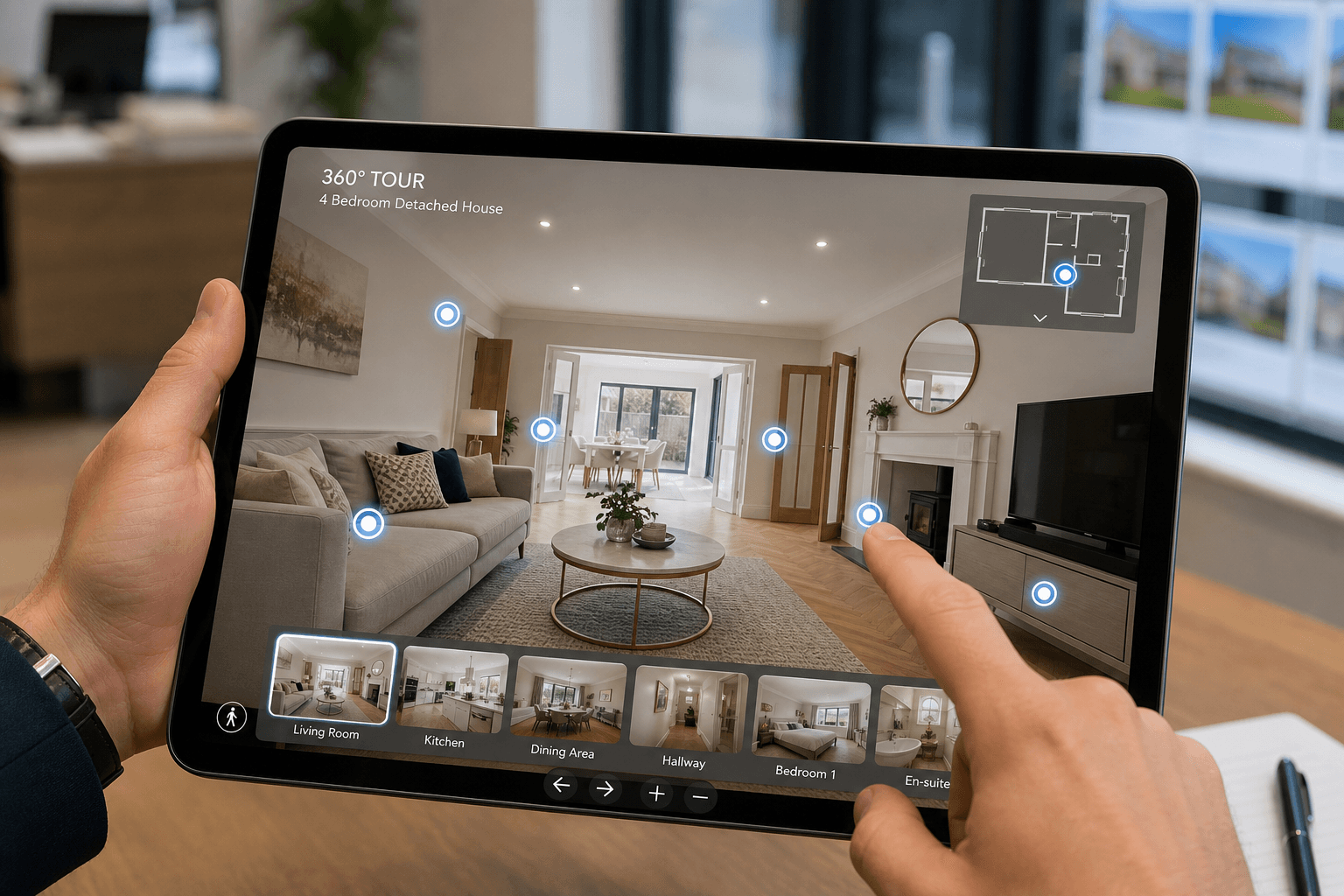
360 Virtual Tours UK: What Estate Agents Should Expect from a Tour Provider
Looking for 360 virtual tours UK? Here is what a professional tour includes, how it differs from Matterport and video, and how agents should brief and embed tours on portals.
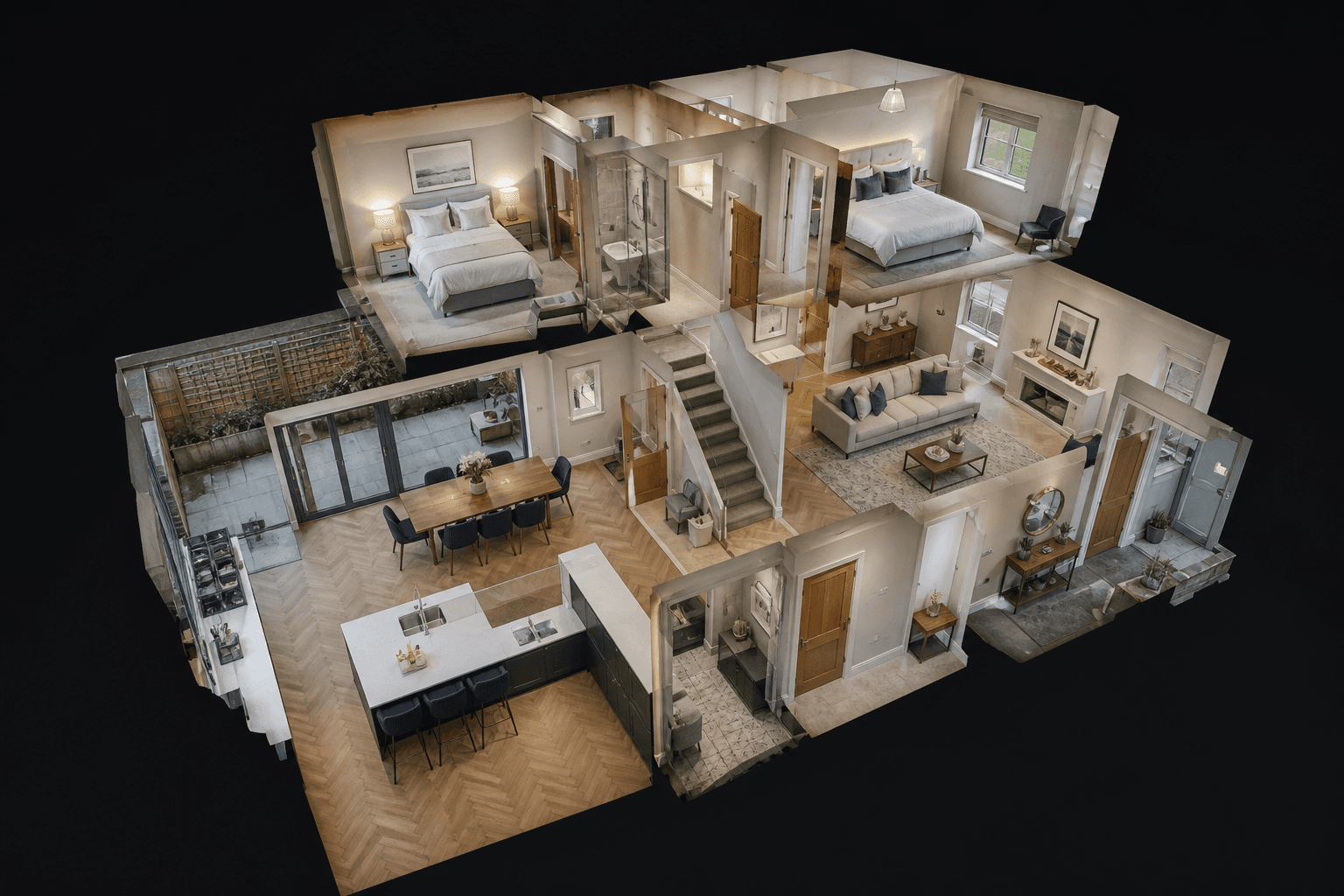
Matterport Scanning Services UK: What Agents and Landlords Get
Matterport scanning is more than a fancy tour. Here is what UK Matterport scanning services actually deliver — dollhouse view, measurements, schematic plans — and when to book them.
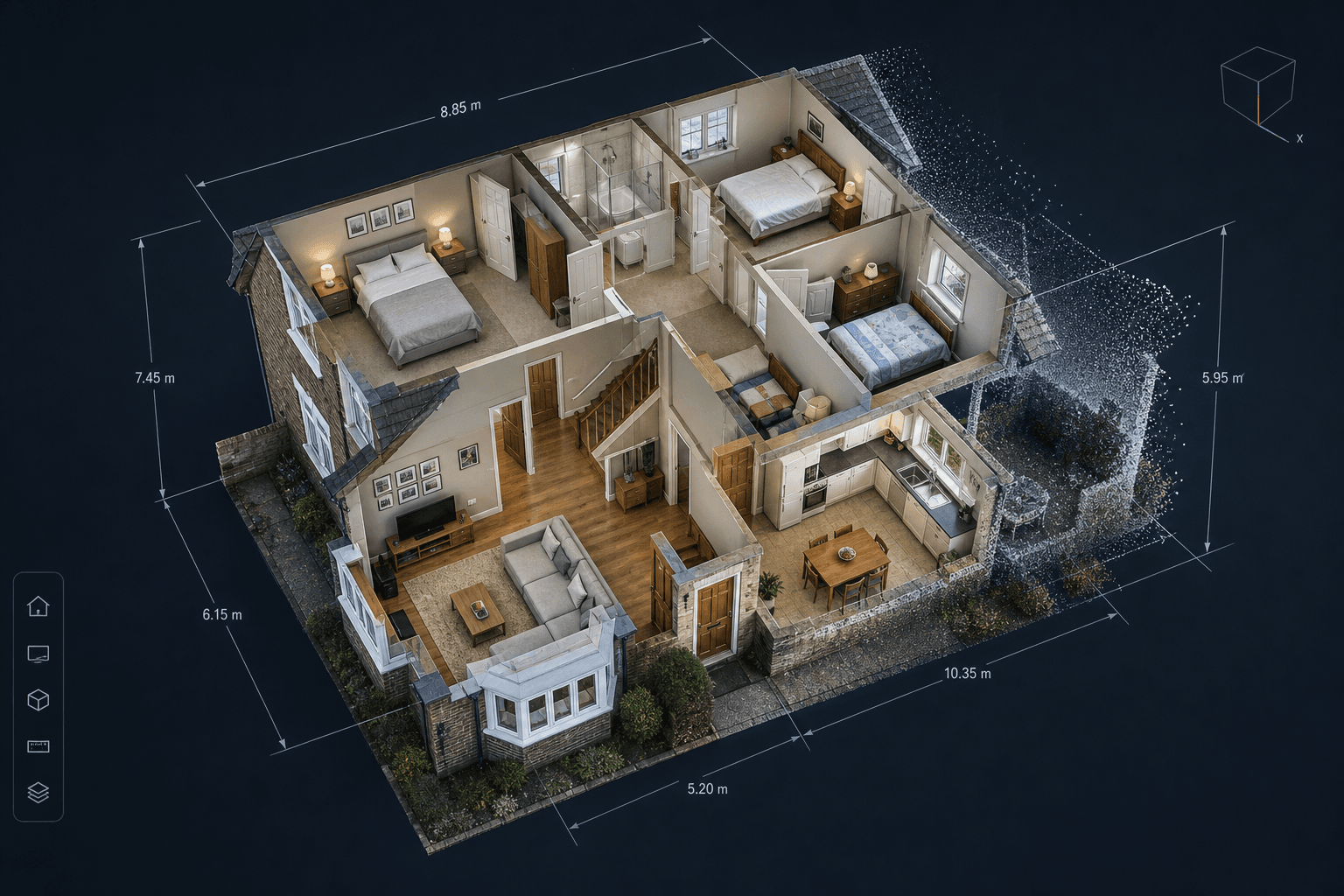
Digital Twins and Measured Surveys: What Property Professionals Need to Know
Digital twins have moved from construction jargon to practical property tool. Here's what a digital twin actually is, how measured surveys create one, and where agents, landlords and developers are using them today.