
Why Professional Property Photography Matters
Professional property photography is one of the highest-impact investments an estate agent or vendor can make. This guide explains how it affects click-through rates, enquiry quality, valuations and brand perception — and why phone photos simply cannot compete.
Key Takeaways
- The lead photograph determines whether buyers click through to a listing.
- Professional HDR editing creates brighter, more balanced images than phone cameras produce.
- Better photography attracts more serious enquiries and reduces wasted viewings.
- Consistent, professional imagery strengthens an estate agent's brand across all listings.
- Vendors notice and remember which agent presented their property best.
- Photoplan delivers bright, HDR-edited photography nationwide, often combined with floor plans in one visit.
The property market is visual. Buyers browse listings at speed — often on a phone, often late at night, often across dozens of properties in a single session. They stop scrolling when something catches their eye. For the vast majority of listings, that first impression is made entirely by the lead photograph. Professional property photography is not a cosmetic extra. It is the single most important factor in whether a buyer clicks through or moves on.
Need professional property photography? Book a Photoplan photoshoot.
Photoplan delivers bright, HDR-edited property photography nationwide — often combined with floor plans and virtual tours in a single visit. Book online or speak to our team about agency pricing.
First impressions and click-through rates
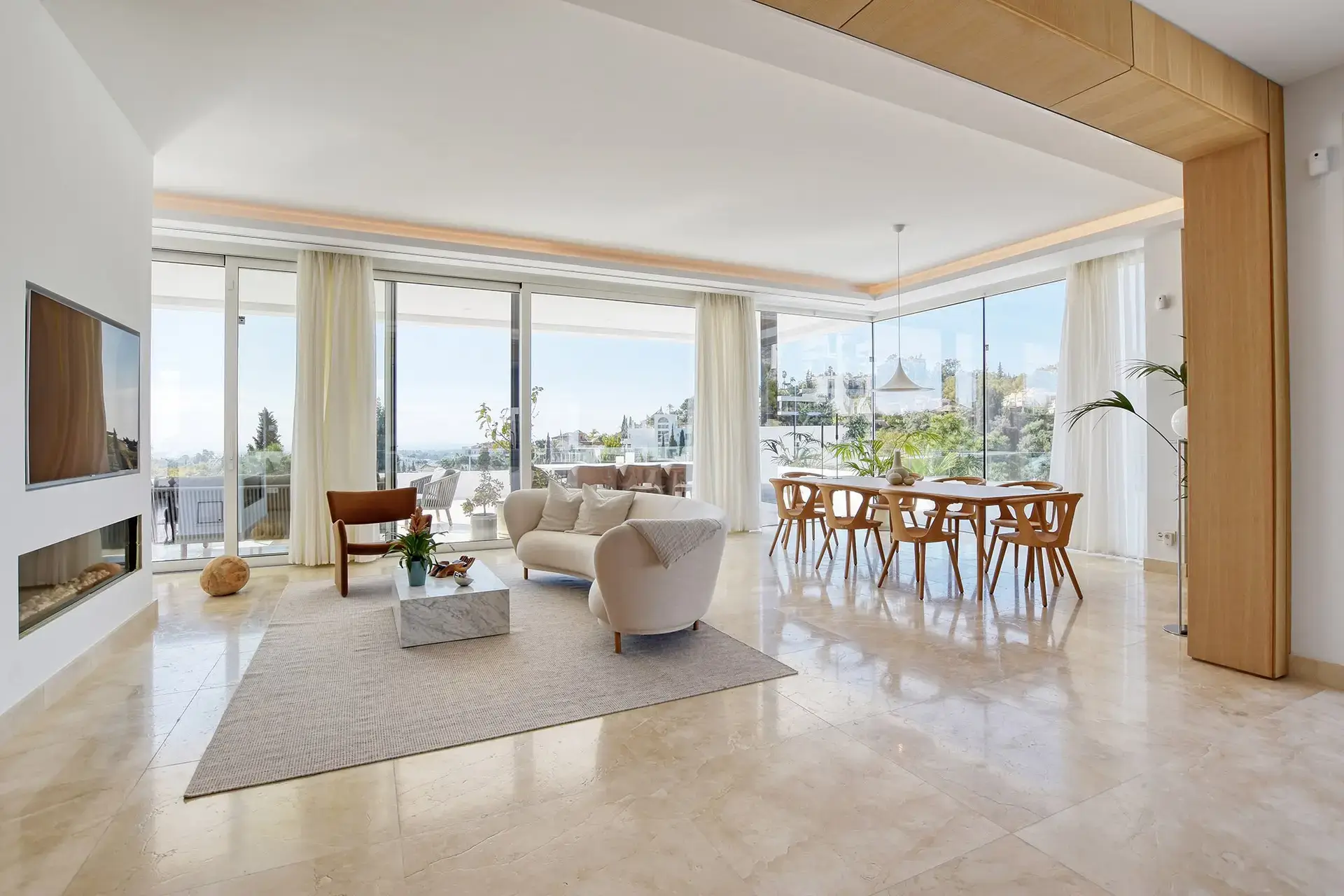
Rightmove and Zoopla show thumbnail images in search results before buyers ever see a full listing. The thumbnail — usually the exterior or the main living space — is doing the entire job of first impression. A dark, narrow-angle, slightly blurred phone photograph will never compete with a bright, wide-angle, professionally edited image in that context. The buyer's eye is drawn to light, space and clarity.
Research consistently shows that the quality of the lead photograph is the primary driver of click-through rate from search results to a listing detail page. A listing with professional photography receives more initial clicks. More clicks means more views, more saved searches and more enquiries. For agents who pay per listing on premium placement, better photography delivers a measurable return on investment.
The effect compounds. A buyer who clicks through and finds the rest of the images equally well-composed is primed to enquire. A buyer who clicks through expecting quality and is met with dark, uncropped shots of cluttered rooms is unlikely to contact the agent. Professional photography creates a consistent quality signal across the entire listing.
What professional photography actually involves
It is worth being precise about what separates professional property photography from a camera phone shoot, because the gap is wider than most people expect.
Optics: Professional photographers use wide-angle lenses specifically calibrated for interior spaces. These lenses capture more of a room without distorting proportions the way an ultrawide phone camera does. The result shows the room as it feels in person — spacious, but not exaggerated.
Lighting: The fundamental challenge in property photography is the contrast between bright window light and darker interior spaces. A phone camera cannot resolve this in a single exposure. Professionals use a combination of flash, ambient light and multiple exposures to balance the scene so both the interior and the view through windows appear correctly exposed. This is what creates the bright, open feel buyers associate with high-quality listings.
Composition: A trained photographer reads a room and selects the composition that shows its size, flow and key features most effectively. Angles are chosen to emphasise ceiling height, connect adjacent spaces and guide the viewer's eye. This is a skill developed over thousands of shoots, not a setting on a phone.
Post-production editing: Even after a perfect shoot, raw images need professional editing — colour correction, exposure balancing, HDR blending and careful retouching. Photoplan's editors process every image to a consistent standard before delivery. See our guide to HDR vs flambient photography for more on the techniques used in professional interior photography.
Enquiry quality and buyer behaviour
Better photography does not just generate more enquiries — it generates better ones. When photographs show a property accurately and attractively, buyers who enquire already have a realistic sense of what they are going to see. They are not enquiring based on wishful thinking about a property that might look different in person.
This matters because:
- Viewings are more productive. Buyers who have a clear picture of the property from the listing arrive with appropriate expectations and spend their time assessing condition and fit, not basic spatial questions.
- Conversion from viewing to offer is higher. Buyers who were not surprised by anything on their viewing are less likely to renegotiate or withdraw.
- Vendor experience is better. Vendors whose home has been photographed professionally tend to have fewer viewings from buyers who immediately decide the property is not for them. More of the viewings count.
There is also a self-selection effect. Buyers who are serious about a property invest time in looking at every photograph, zooming in on details and forming a considered view before they enquire. Professional photography gives them the raw material to do that. A poorly photographed listing forces buyers to make assumptions — and assumptions often lead to disappointment.
Winning instructions: how photography affects valuations
For estate agents, professional photography is not only about the performance of individual listings. It is also a tool for winning new instructions. When an agent attends a valuation and can demonstrate — through a portfolio of live listings — that their properties are consistently photographed to a high standard, vendors notice.
Most vendors have spent time on Rightmove and Zoopla looking at other properties. They know what a well-photographed listing looks like, and they know what a poorly-photographed one looks like. When they are choosing which agent to appoint, the question they are asking is: will my home be presented at its best?
An agent who uses professional photography on every instruction signals that the answer is yes. An agent whose listings show unedited phone photographs signals that presentation is not a priority. In a competitive instruction market, that distinction can win or lose the business.
We cover this and related topics in more depth in our shorter post on why property photography matters. This guide goes further into the specific mechanics and standards involved.
Brand consistency and portfolio presentation
Beyond individual listings, professional photography shapes an agent's brand. When every listing in a portfolio looks consistent — same quality of light, same editing standard, same compositional approach — the agent presents as a serious, professional operation. This consistency is visible on Rightmove and Zoopla, in email campaigns, on social media and in the agent's own website listings.
Inconsistency, by contrast, is immediately noticeable. A portfolio that mixes bright, professionally edited images with dark phone photographs suggests an agency that does not apply consistent standards. Vendors and buyers draw conclusions from this, consciously or not.
For agents working across a branch network, consistent photography is even more important. Every branch reflects on the brand, and a single branch that uses substandard photography undermines the reputation the rest of the network has built.
Photoplan's editing process applies the same colour balance, brightness and style to every image, regardless of the photographer or location. This means your listings look like your listings wherever they are.
Why phone photos fall short
Phone cameras have improved enormously in recent years, and it is worth being honest about what they can and cannot do. In bright daylight, a modern phone camera produces good exterior photographs. This is the narrow use case where phones approach professional quality.
Interior photography is different. The challenges of contrast, colour temperature, angle and composition that interior property photography presents cannot be solved by computational photography alone. Even the best phone cameras produce images that experienced buyers and agents immediately recognise as non-professional — slightly dark, slightly distorted, missing the sense of space and light that makes a listing photograph work.
There is also the question of perception. An agent who photographs properties on their phone sends a message — intentionally or not — that photography is not worth investing in. That message reaches vendors and buyers alike.
Combining photography with floor plans
The most efficient approach for most listings is to book a combined visit — professional photography and a floor plan survey in a single appointment. Both assets are delivered within 24 hours, and the listing can go live with everything it needs in one go.
For leasehold properties, a Land Registry-compliant lease plan can be added to the same visit. One appointment, all assets.
See our estate agent photography standards guide for more on what a professional photoshoot should cover, and view all guides for advice on property marketing, floor plans and listing performance.
The bottom line
Professional property photography is the most visible investment in a listing and one of the most consequential. It determines whether buyers click through, how they feel about the property before they visit and whether the agent wins the instruction in the first place. Phone photographs are not a viable alternative — the gap in quality is immediately obvious to buyers and vendors who know what a well-presented listing looks like. For agents who want to perform consistently and build a strong brand, professional photography on every listing is the baseline, not the upgrade.
Need professional property photography? Book a Photoplan photoshoot.
Photoplan delivers bright, HDR-edited property photography nationwide — often combined with floor plans and virtual tours in a single visit. Book online or speak to our team about agency pricing.
- #property photography
- #estate agent marketing
- #rightmove
- #zoopla
- #property listings
- #first impressions
Frequently Asked Questions

The Photoplan Team
Property Media Specialists
The Photoplan team produces property photography, floor plans, tours, video and CGI that help estate agents, developers and commercial clients market property beautifully.
Need professional property photography? Book a Photoplan photoshoot.
Photoplan delivers bright, HDR-edited property photography nationwide — often combined with floor plans and virtual tours in a single visit.
Estate agents book through the app · One-off customers order in the shop · or contact us
Related Articles

AI Image Enhancement Explained — HDR Photo, PhotoEdit and PhotoClear
HDR Photo, PhotoEdit and PhotoClear are three AI-powered image enhancement tools in the ReHub Studio suite. This guide explains what each one does, when to use it, how it improves listing photography, and how the three tools work together as a connected workflow for estate agents and property photographers.
The Complete AI Property Marketing Guide — From Photoshoot to Portal
Estate agents now have access to a connected AI workflow that takes a property from photoshoot through to portal-ready listing assets in a single pipeline. This guide explains each stage — photo, declutter, stage, edit, video, twilight — and how ReHub Studio connects them.
AI Property Videos Explained — How They Work and When to Use Them
AI property videos turn listing photographs into short cinematic walkthrough videos without any filming. This guide explains how the technology works, how ImageMotion compares to a traditional videographer, what portals and social media platforms support property video, and when each approach is the right choice.