
How to Photograph Small Rooms and Flats: Making Compact Properties Look Their Best
Studio flats, box bedrooms and galley kitchens are the hardest spaces in property photography. Here's how professionals make compact homes look spacious, honest and inviting — from lens choice to light and styling.
Key Takeaways
- Corner and doorway angles that include two or three walls give small rooms depth and context.
- Moderate wide-angle lenses show space honestly; extreme wide angles distort rooms and disappoint viewers.
- Visible floor space is the strongest spaciousness cue — declutter floors before anything else.
- Bright, even lighting makes rooms feel larger; dark corners shrink them.
- Floor plans and virtual tours complete the picture for compact homes, proving the layout works.
London agents know the truth of the market: much of what sells is compact. Studio flats, one-beds, box bedrooms, galley kitchens — the spaces that are hardest to photograph are the ones that need great photography most, because a small room shot badly looks like a cupboard.
Here is how professionals approach compact spaces, and how to avoid the trap of making them look too big.
Angle: Corners and Doorways Win
The single biggest improvement in small-room photography is where you stand.
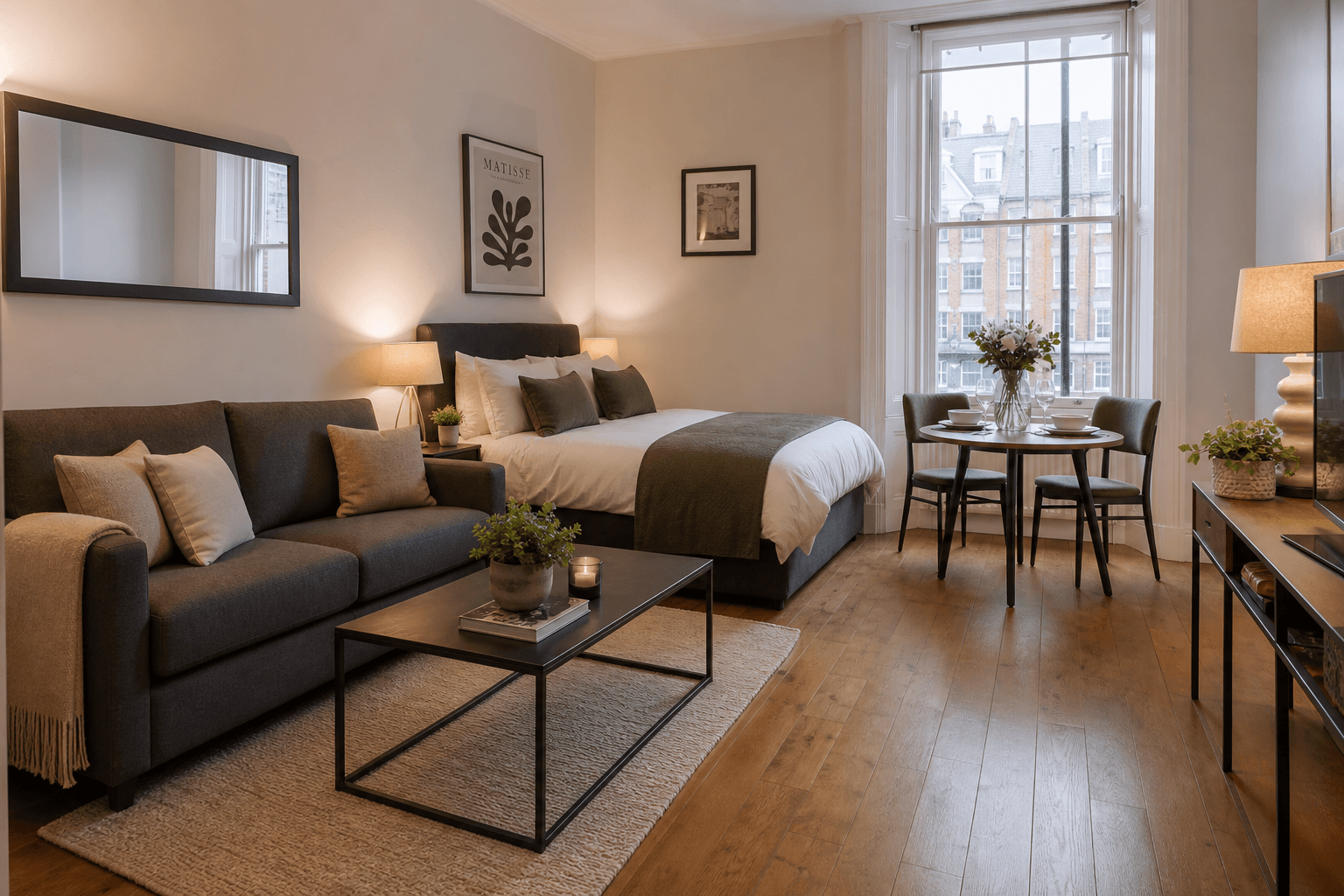
- Shoot from a corner to capture two or three walls in one frame. Three visible walls give the eye depth cues; a flat-on shot of one wall gives none.
- Use the doorway when corners aren't available — it adds a few precious feet of distance and frames the room the way a viewer first sees it.
- Favour the longest sightline. Shooting down the length of a galley kitchen or through an open door into the next room extends the perceived space.
Small rooms rarely need many frames. One or two well-chosen angles beat five cramped ones — a gallery of near-identical tight shots makes a property feel smaller, not bigger.
Lens: Wide, Not Warped
Wide-angle lenses are essential indoors — the eye sees far more of a room than a standard lens can capture from a corner. But there is a line:
- Moderate wide (16–24mm full frame) captures the room while keeping walls straight and furniture believable. This is the professional standard — see our guide to the best lenses for property photography.
- Extreme ultra-wide stretches corners, bends verticals and makes a 3m room look like a ballroom. Buyers notice the gap at the viewing, and disappointed viewers don't offer.
The professional test is honest generosity: show the space at its genuine best, never at a size it isn't.
Camera Height and Level: The Unsexy Fundamentals
Two technical habits separate professional interiors from phone snaps:
- Chest height, not eye height. Around 1.2–1.4m balances floor and ceiling and keeps furniture proportions natural. Too high and the frame fills with ceiling; too low and furniture looms.
- Perfectly level. Converging verticals — walls leaning inward — read instantly as amateur and make small rooms feel unstable. A tripod and a bubble level (or careful correction in editing) keep every vertical straight.
Light: Brightness Is Space
Dark rooms photograph small. The same room, evenly lit, photographs generous.
- Shoot with curtains and blinds fully open; clean windows earn their keep here.
- Time the shoot for when the room gets its natural light — north-facing rooms often photograph best midday.
- Balance, don't blast. Professionals blend ambient light with subtle flash or bracketed exposures so windows keep their view and corners keep detail — no orange lamp glow, no blown-out whites.
- Turn on every working light for warmth, but let daylight do the heavy lifting.
Styling: Floor Space Sells
The strongest "this room is big enough" signal in any photo is visible floor. Before the camera comes out:
- Clear the floor completely — shoes, boxes, bins, laundry baskets, cables
- Remove one piece of furniture from any crowded room; a small room with four things in it looks bigger than the same room with seven
- Push furniture against walls to open the centre
- Swap bulky items for lower-profile ones where possible — a low bed frame adds visual ceiling height
- Use mirrors judiciously; they double perceived depth in narrow rooms
For studios, style the zones — bed dressed as bed, sofa area as living space, table set for two — so one room reads as a functioning home. Our full room-by-room preparation guide covers the details, and digital decluttering can rescue rooms that can't be physically cleared.
Empty Compact Rooms: Add Scale Back
An empty box room is the hardest photograph in property — with no furniture, buyers have no sense of whether a double bed fits, and they assume the worst. Two fixes:
- Virtual staging adds correctly scaled furniture digitally, answering the "does a bed fit?" question at a glance (clearly disclosed, always)
- A dimensioned floor plan proves the numbers — for compact properties a floor plan isn't optional marketing, it's the evidence
Complete the Picture: Plans and Tours
Photography alone carries a burden for small homes: buyers suspect trickery precisely because everyone has been burned by a wide-angle studio flat. The antidote is transparency across formats:
- A floor plan with dimensions and total floor area lets buyers verify everything the photos show
- A 360° virtual tour removes doubt entirely — buyers walk the space themselves and arrive at viewings pre-qualified rather than sceptical
Compact listings marketed with all three consistently generate better-quality enquiries than photos alone.
Photographing Compact Properties Every Day
Small spaces are a London speciality, and they're ours: Photoplan photographs studios, flats and compact homes across the capital daily — photography, floor plans and tours in a single visit. Get in touch to book a shoot that makes your smallest instruction work its hardest.
Frequently Asked Questions

The Photoplan Team
Property Media Specialists
The Photoplan team produces property photography, floor plans, tours, video and CGI that help estate agents, developers and commercial clients market property beautifully.
Marketing a compact property?
Photoplan photographs studios, flats and compact homes across London every day — photography, floor plans and virtual tours that make small spaces work hard online.
Estate agents book through the app · One-off customers order in the shop · or contact us
Related Articles
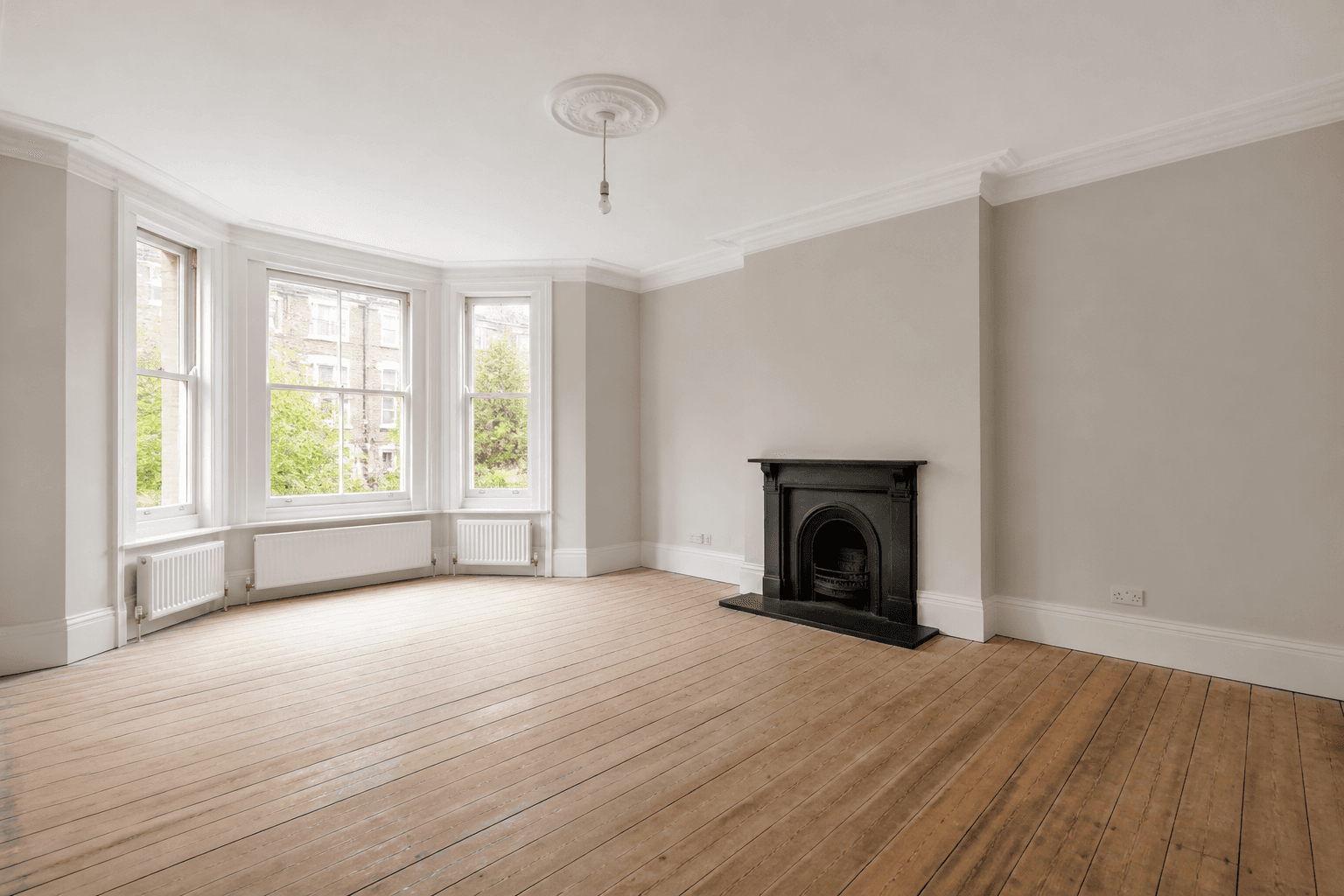
Empty Property Photography: How to Market Vacant and Unfurnished Homes
Vacant homes photograph cold — and cold listings underperform. Here is how agents should shoot, stage and present empty or unfurnished property without wasting money on full physical staging.
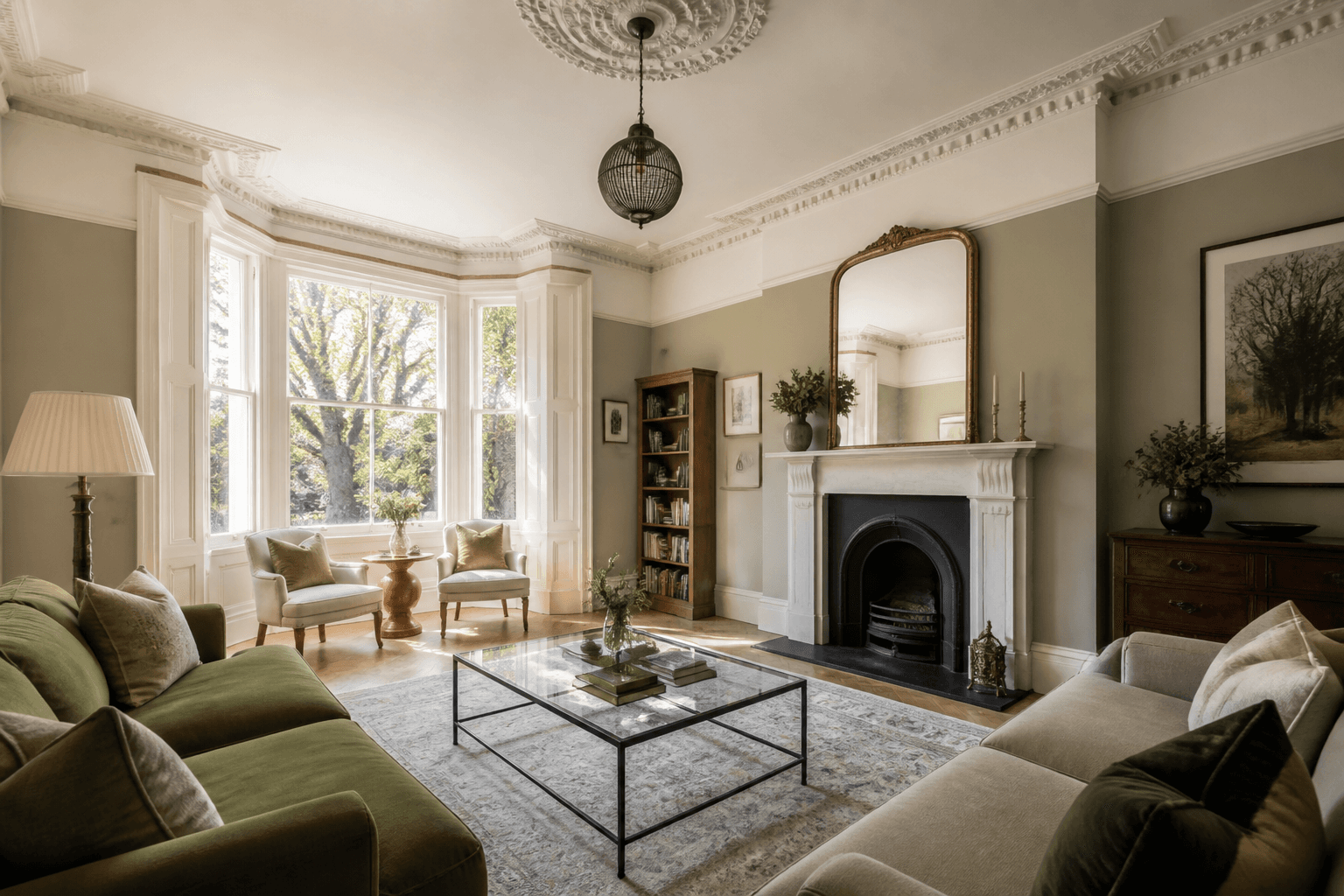
Photographing Period and Listed Properties: A Guide for UK Estate Agents
Georgian, Victorian and listed homes need a different photographic approach to new builds. Here is how to capture character, light and detail without flattening what makes them valuable.
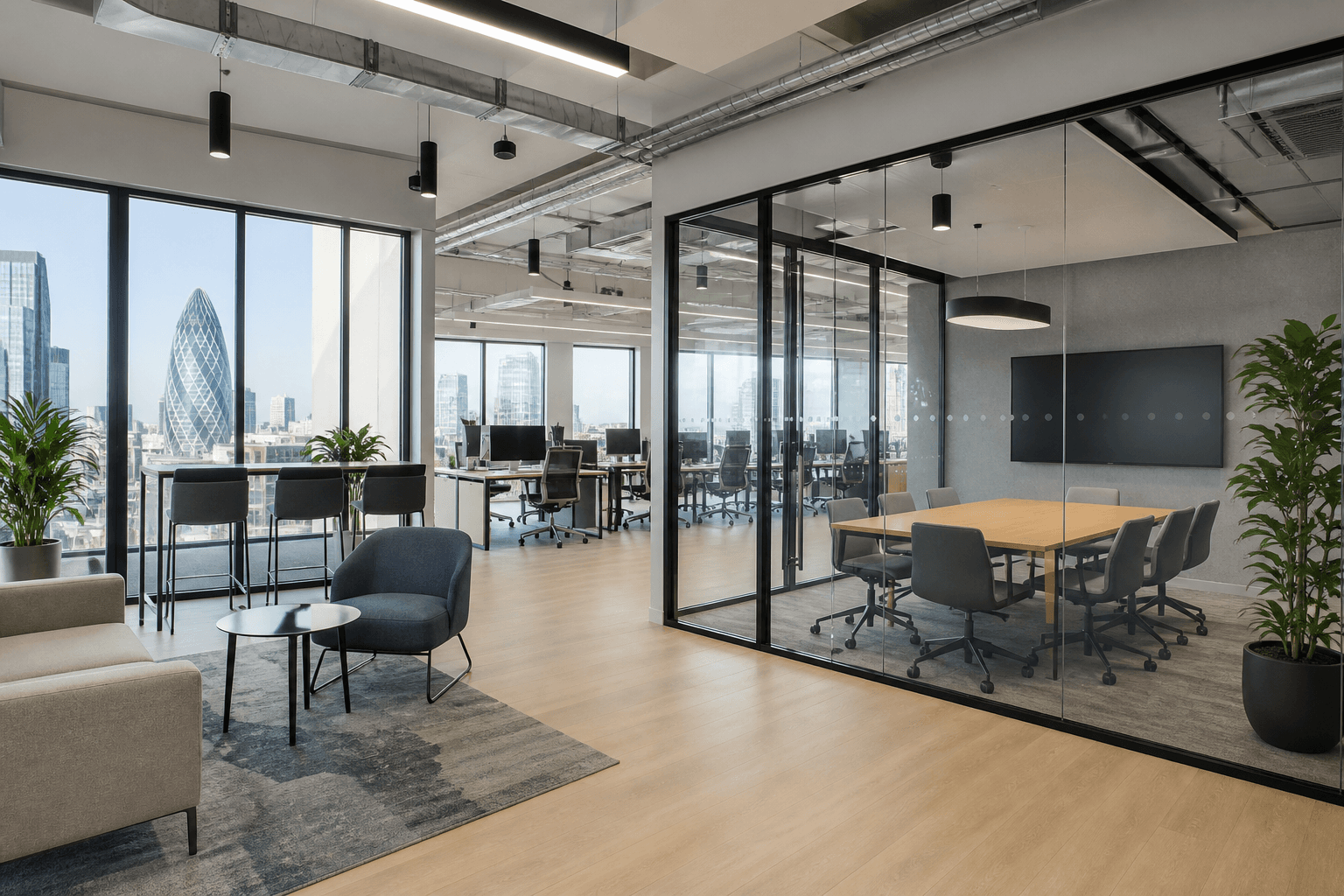
Commercial Property Photography: What Landlords and Agents Actually Need
Commercial listings fail online for the same reason residential ones do — weak media. Here is the shot list landlords, agents and asset managers should commission for offices, retail and industrial space.